
When a harbour's slipway is out of action, the boats cannot come out of the water. Repairs, maintenance, anything that means looking at the hull below the waterline — all of it begins with a boat being drawn up the rails on a cradle.
At Mituo the cradle had to be replaced. What TNO handed over at the end was not the words “it is finished” — it was the new cradle run down into the water and worked once, with the fishermen's association standing there watching.
The answer is in the dates on the work order: ordered on 23 June, material into the shop on 29 July, every component assembled and standing ready by 8 September — and then a pause, waiting on a date from the site. Only on 10 September did the crew go into the harbour and start taking the old cradle apart.
Eleven weeks from order to ready; a handful of days actually spent occupying the harbour. That is not a coincidence but the only sensible way to run this kind of job: finish everything that can be finished ashore, and leave on site only what has to happen on site.
A slipway cradle is not one component but an assembly — hardwood baulks, a welded steel underframe, and rows of rollers. The timber is cut to size and dressed, the underframe welded up, and each roller mount set in position and bolted down.
What went to site at the end of all this was a finished cradle, not a pile of parts.
The old cradle came out on 10 September, with the rails and slope left untouched; on 15 and 16 September the new one was installed and adjusted.
Fitting it was not where the job ended. It was then run down the rails into the water under a pull test, to confirm how the whole assembly behaved in service, and commissioned together with staff from the local fishermen's association. It passed.
The people who would be using it stood and watched it signed off — which for a public harbour is how it ought to be.
Eleven weeks in the shop, seven days on site. And what TNO handed over was not a cradle that looked finished, but one that had already been run down the rails once and proved.
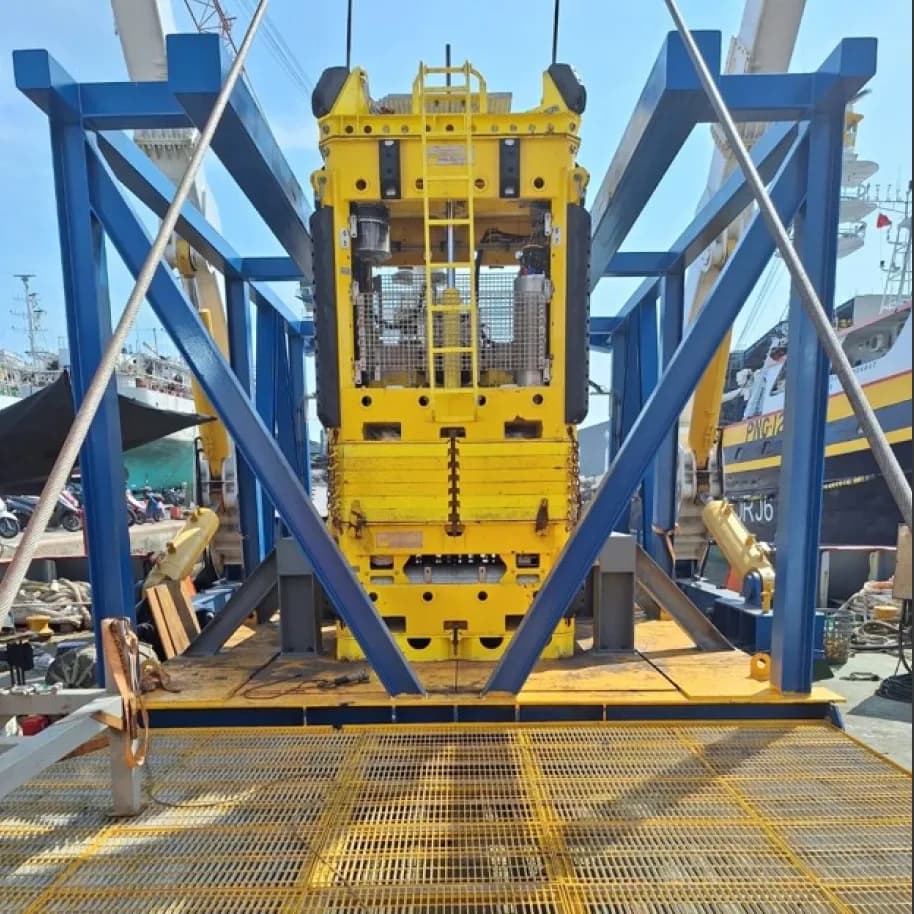
A portal-frame steel platform for equipment that is lifted and lowered in use — fabricated ashore, assembled on board in two separate visits, and accepted by the owner's representative
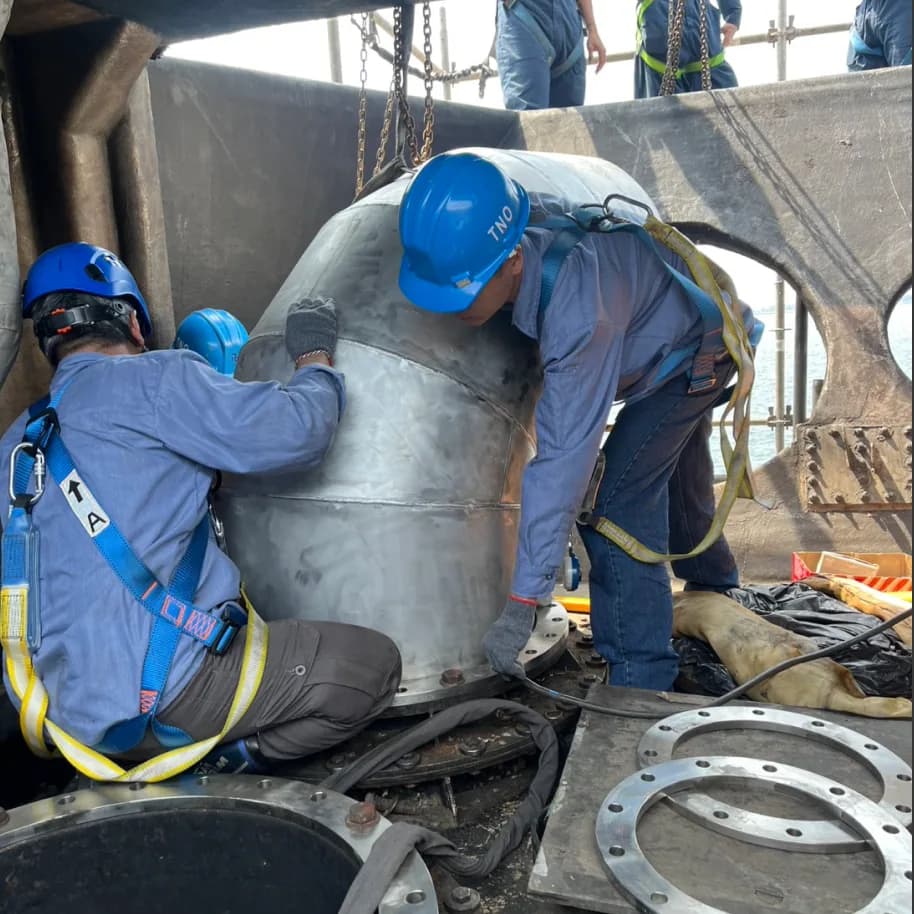
Twenty-four days on board: old sections out, new ones welded in, welds passivated and the run insulated and clad — with port and starboard overlapping
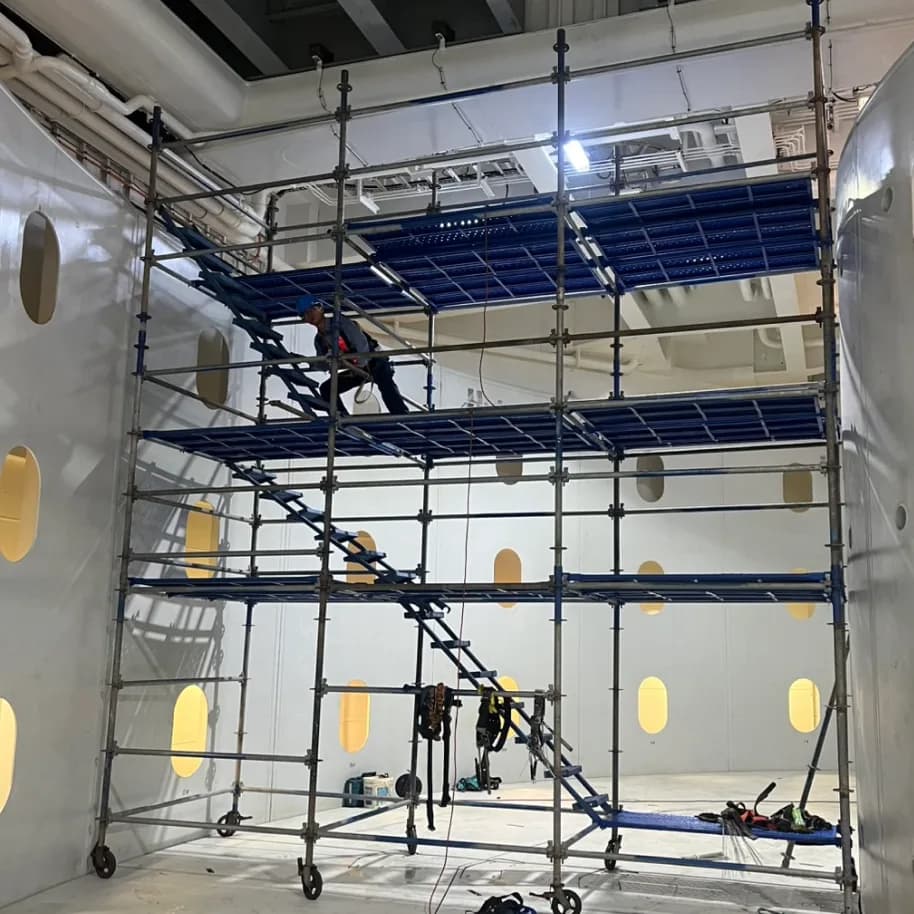
A three-tier mobile scaffold erected inside a compartment, on site the day after the order and finished the same day — because everything that follows is waiting on it

Partner With Us