
With exhaust pipework there is no option of finishing the job ashore.
The new sections can be made up in advance, but removing the old run, positioning, welding out, insulating and finishing the cladding all have to happen in the engine room — and for two sets of pipework, main engine and generator, on both sides of the ship. TNO's time on board came to twenty-four days.
The old sections came out on 28 April and were lifted off the next day. On 30 April the new pipework began to be positioned and tacked — the old barely down before the new went up.
By 7 May it was fully welded, the welds passivated, and the angle supports for the insulation welded on; lagging and metal cladding followed. All of it was complete on 20 May, the gear came off the day after, and the work was accepted.
For that stretch the engine room was a working face rather than a passage. Exhaust pipework runs close to where people work and to cabling and equipment, and both removal and welding bring heat and sparks with them, so the protection around the area has to be in place before any of it can be scheduled.
Holding the job to twenty-four days came less from doing any one operation quickly than from how far the operations were allowed to overlap.
Lagging on the port side began on 11 May; by the 14th, cladding on the starboard side had already started; and it was the 16th before the insulation on both sides was finished. For several days in the middle, one side was being wrapped while the other was being closed up.
Running the work that way assumes material, labour and working space are all ready. Let any one of them fall behind and the overlap turns into one trade blocking another.
After the welding is complete, the next entry on the work order is passivation of the welds.
The heat of welding changes the condition of the surface around the weld, and its resistance to corrosion drops with it. Left alone, the weld is often the first part of the whole run to rust — and the weld then disappears under insulation and cladding, so by the time anything shows on the outside, it has usually been going on inside for a while.
Done properly, this step leaves nothing visible to show for it. Whether it was done at all, nobody can tell by looking — only the people who did the work know.
The twenty-four days came from letting the operations overlap, and that part shows. The years that follow come from the step that disappears under the lagging and is never seen again. An exhaust run is only properly renewed when both have been done — and both were.
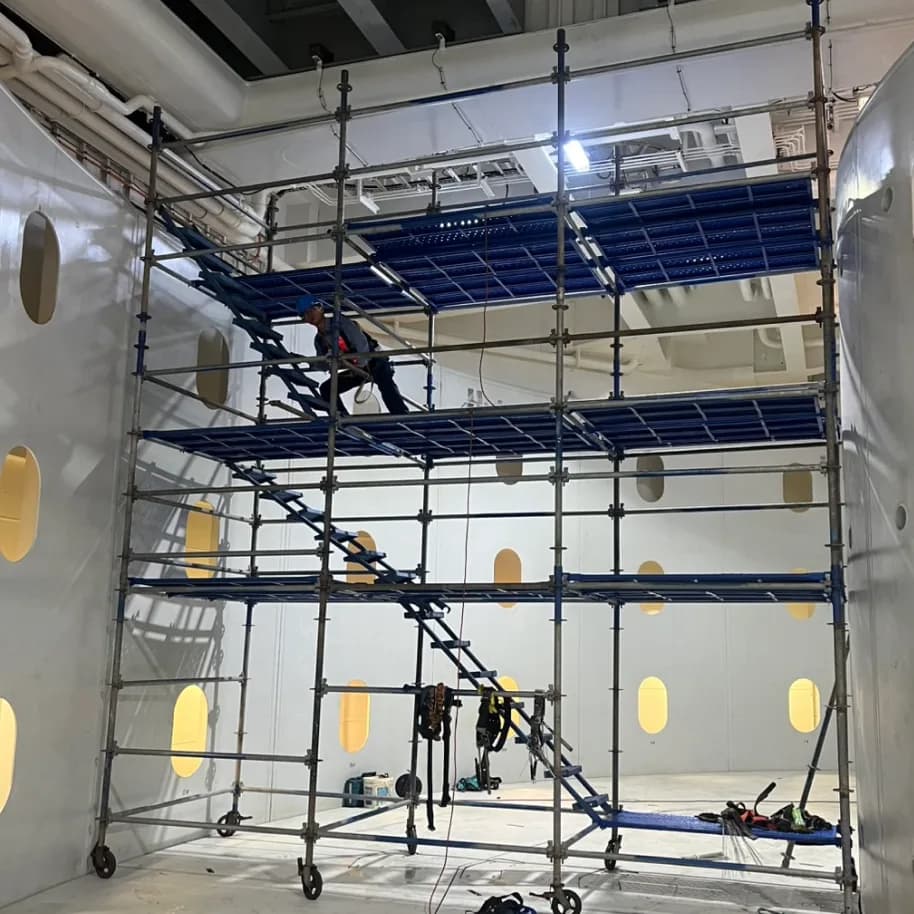
A three-tier mobile scaffold erected inside a compartment, on site the day after the order and finished the same day — because everything that follows is waiting on it
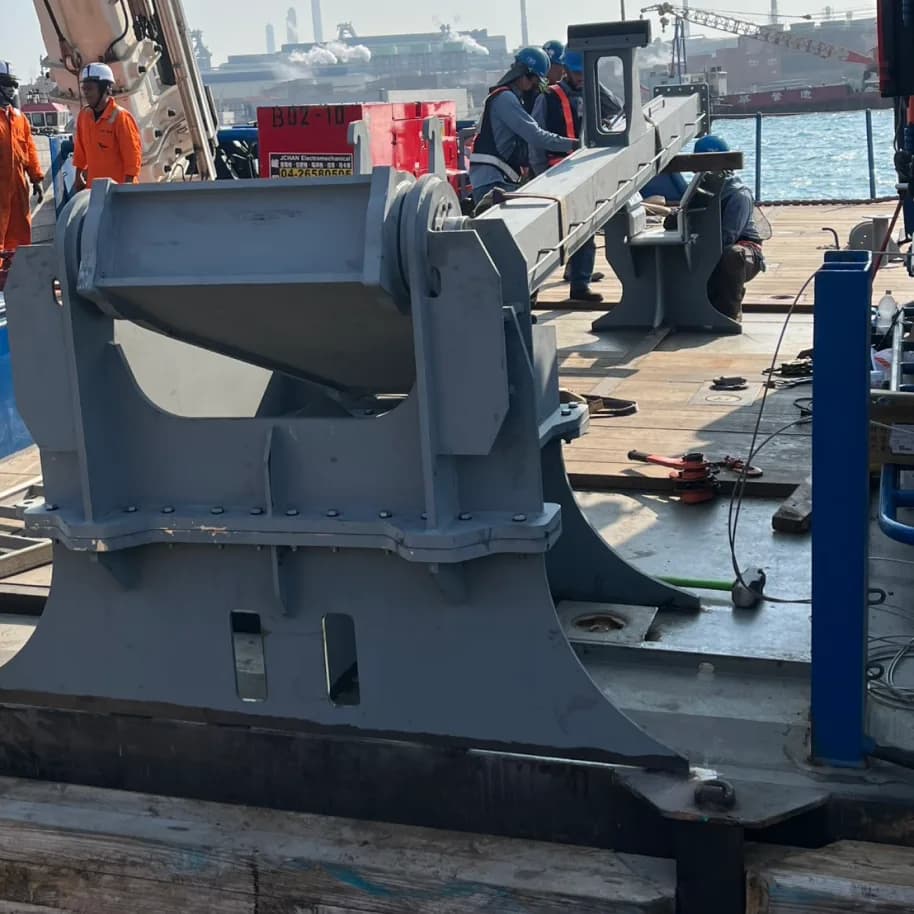
Thirteen days from order to acceptance, with a single day on board — because it had already been assembled and tested in the workshop
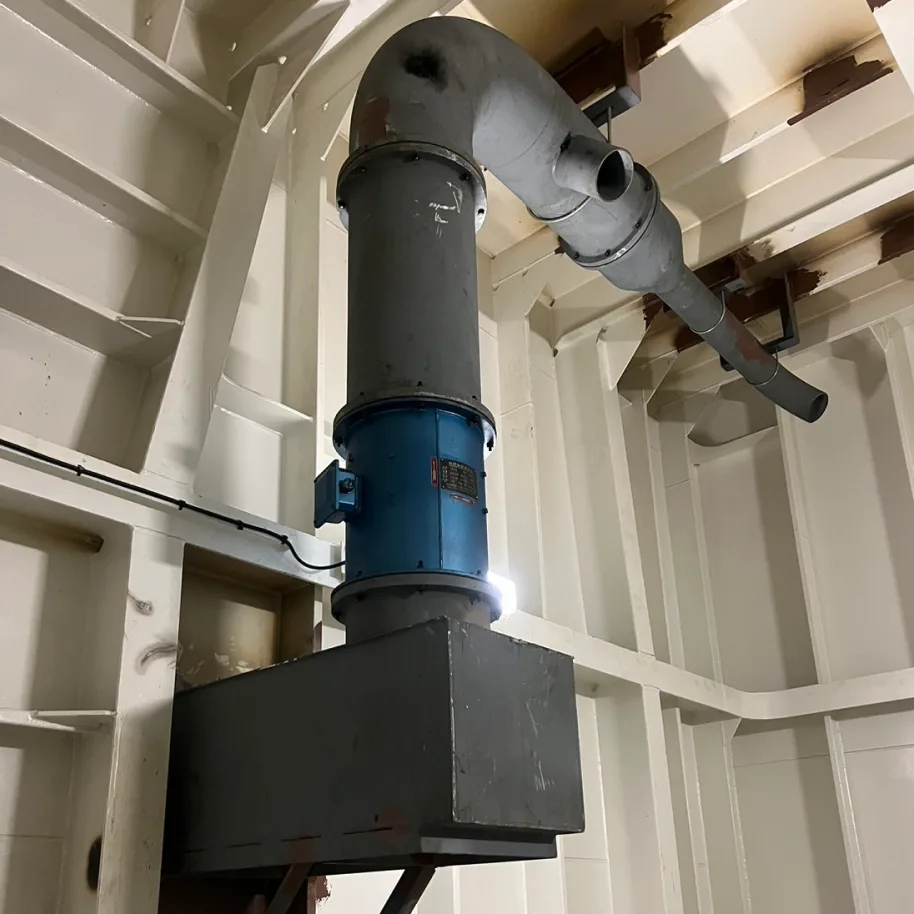
Ventilation components fabricated, assembled and finished in the workshop, then held ready — so that only positioning and welding remained to be done on board

Partner With Us