
Every day a ship sits at the quay is a day she is not earning.
This job meant a whole set of ventilation components, hardly any two alike: ducts working their way around structural members, plenums sitting flush against bulkheads, every louvre and blanking plate answering to its own opening. TNO could have measured and made them on board, a piece at a time, or built them complete ashore and brought them aboard finished. Why the second route was chosen is clearest in the dates.
Working on board and working in the shop are not the same trade. Compartments are tight, the routes through them are already taken up by existing pipework and equipment, and hot work has to fit around the vessel's own controls and the other trades on site. The same task done on board often takes several times as long.
The real cost, though, is not labour but time alongside. So the planning for this kind of work comes down to one principle: finish everything that can be finished ashore, and leave on board only what must be done on board — positioning, welding, and making good around the openings.
Raw material arrived nine days after the order. Fabrication then proceeded compartment by compartment: ducts bent and welded, frames built up for the plenums and louvres, blanking plates cut. As each part was finished the assemblies were brought together and given their surface treatment.
Six more weeks passed between standing ready and going aboard. They were not lost time but deliberate: the vessel was still working, so she was left to work.
Called in on 20 October, the crew had only positioning and welding left to do — ducts hung and fixed, plenums and louvres welded into their bulkhead openings, blanking plates welded continuously around to restore the bulkhead. On completion the work was inspected and passed.
All of which assumes every dimension lines up. Find on board that a section will not meet and there are two choices: take it back to the shop and remake it, or make do — the first costs the ship time, the second costs quality. Which is why setting out and fabrication are not things to improvise on site.
The job spanned better than three months; the ship gave up only the last few days of it. TNO spent three months of its own so that the owner would spend a handful — and nothing was left undone.
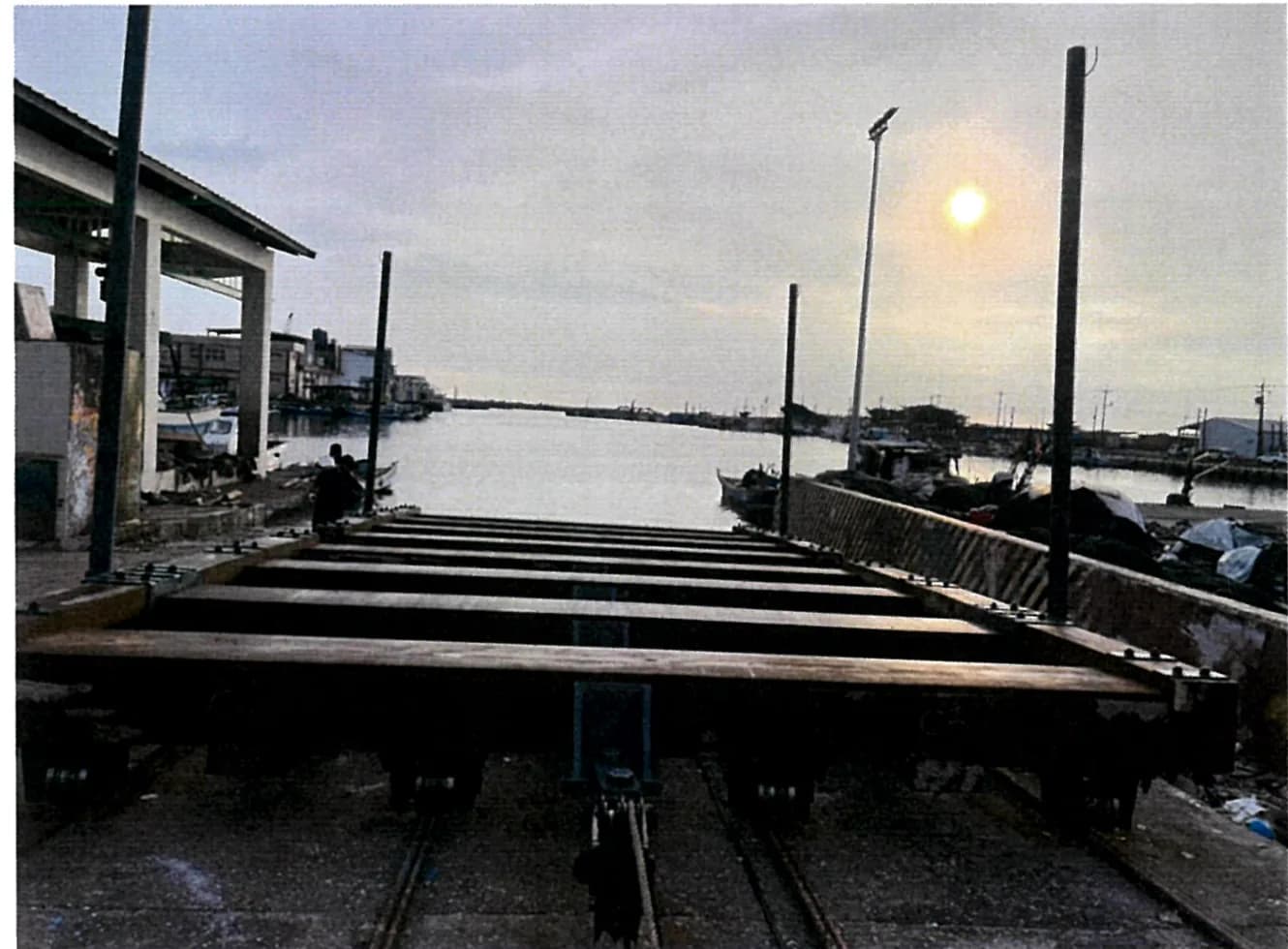
Replacing a fishing harbour's slipway cradle — built and assembled complete in the workshop, then demolished, installed and load-tested on site in seven days
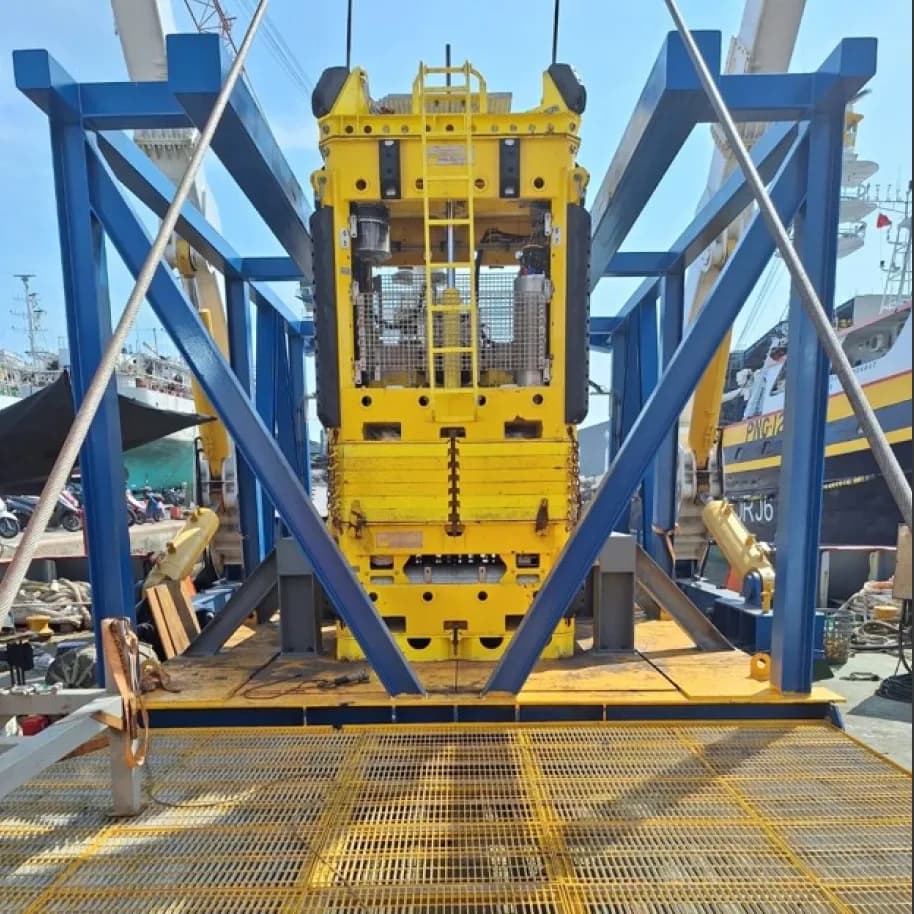
A portal-frame steel platform for equipment that is lifted and lowered in use — fabricated ashore, assembled on board in two separate visits, and accepted by the owner's representative
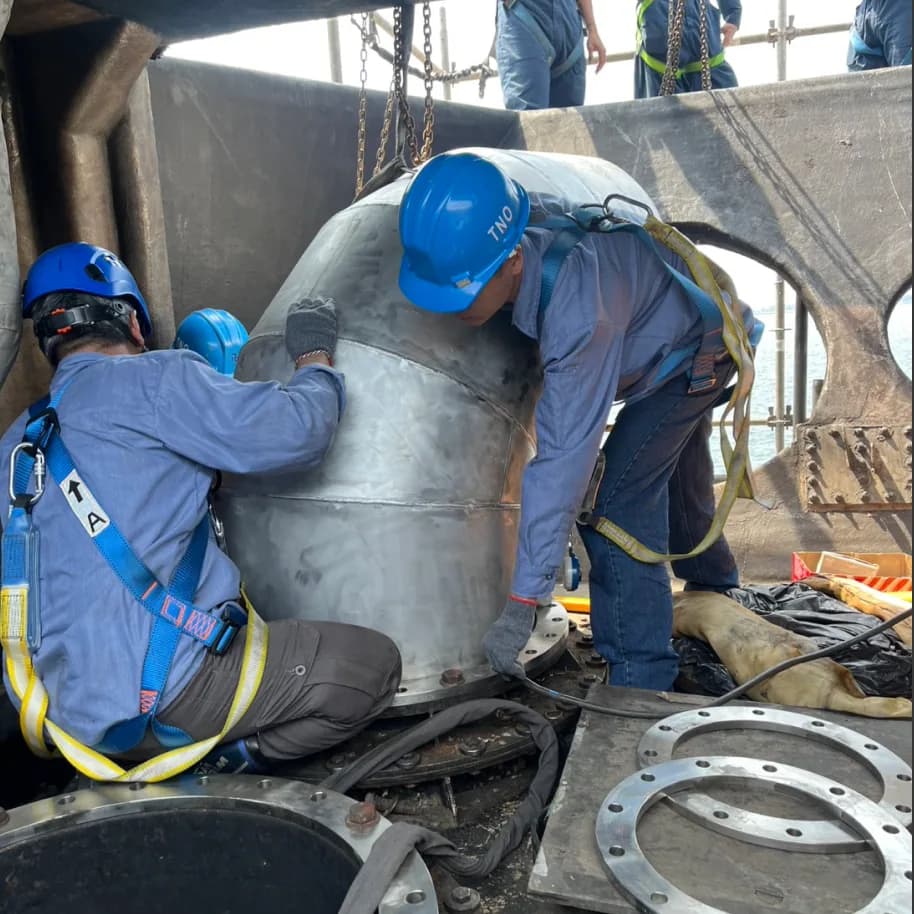
Twenty-four days on board: old sections out, new ones welded in, welds passivated and the run insulated and clad — with port and starboard overlapping
Partner With Us