
When a platform is added to a vessel, the question is not whether it fits but whether it will hold.
The gear it carries is lifted, lowered and recovered, and through all of that the load shifts with the angle of the fall and the movement of the hull. What TNO had to design for was a changing force rather than a static weight.
The weight of the equipment is picked up by its base, carried through the portal frames and their bracing into the platform deck, and from there into the vessel's main structure. Any connection along that path that is not properly made costs the platform its stiffness.
The awkward part is that such a fault does not announce itself. The platform looks just as solid on the day it goes up; the trouble starts quietly as fatigue at the joints, and by the time it shows it has usually been building for a long while.
So the work is planned backwards: where the bases will be bolted to the deck is fixed first, the openings in the platform deck are set out from that, and only then do the frame sections and the arrangement of the bracing follow.
The dates on the work order run like this: ordered on 28 August, materials complete by 15 January the following year. In between, the girders and bracing were cut, assembled and welded in the shop, and the platform deck was cut with its openings to suit the base positions.
Through all four of those months, the ship did not lose a single day to this work.
The assembly was not done in one go. The first session on board was on 16 January; the second not until 25 April, more than three months later.
On each visit the crew could start the moment they were aboard — no discovering on board that a part was missing or a step had been skipped. Assembly was completed on 29 April and accepted by the owner's representative. It passed.
Whether a platform is any good cannot really be told on the day it goes up. It takes a few hundred lifts and a few voyages' worth of movement before the joints have anything to say.
What TNO could do was make every judgement up front: work out where the loads go, and only then decide how each connection should be made. The quality of work like this is not settled on handover day. It is settled in every year that follows.
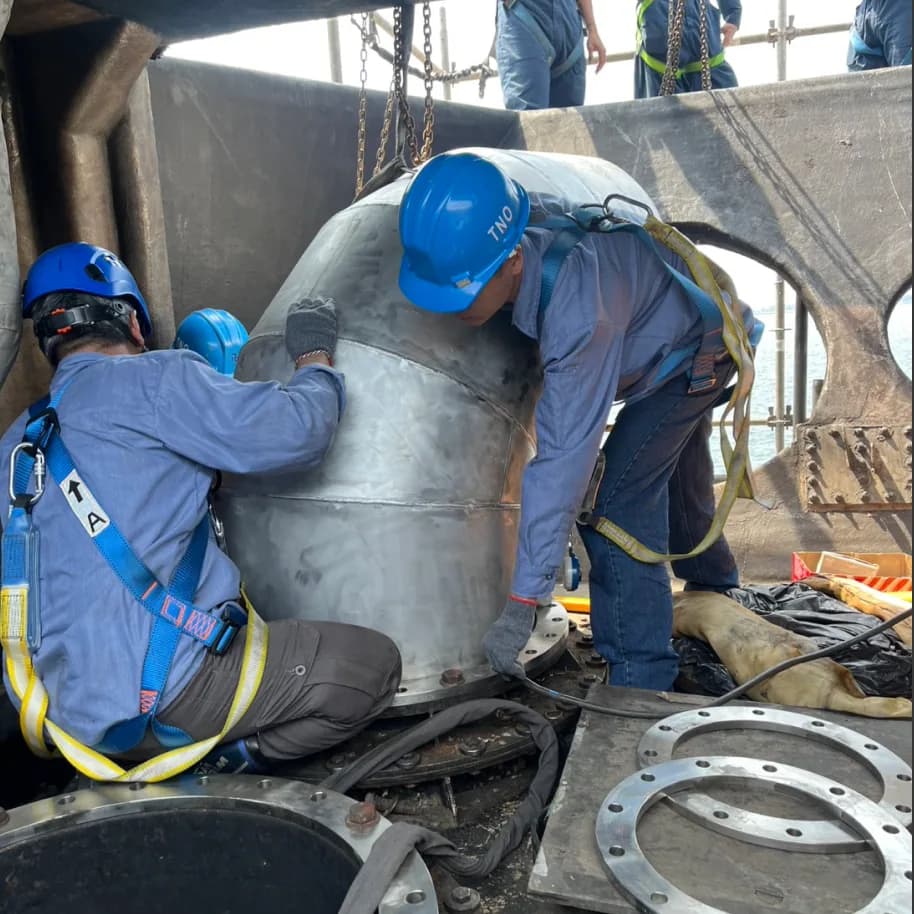
Twenty-four days on board: old sections out, new ones welded in, welds passivated and the run insulated and clad — with port and starboard overlapping
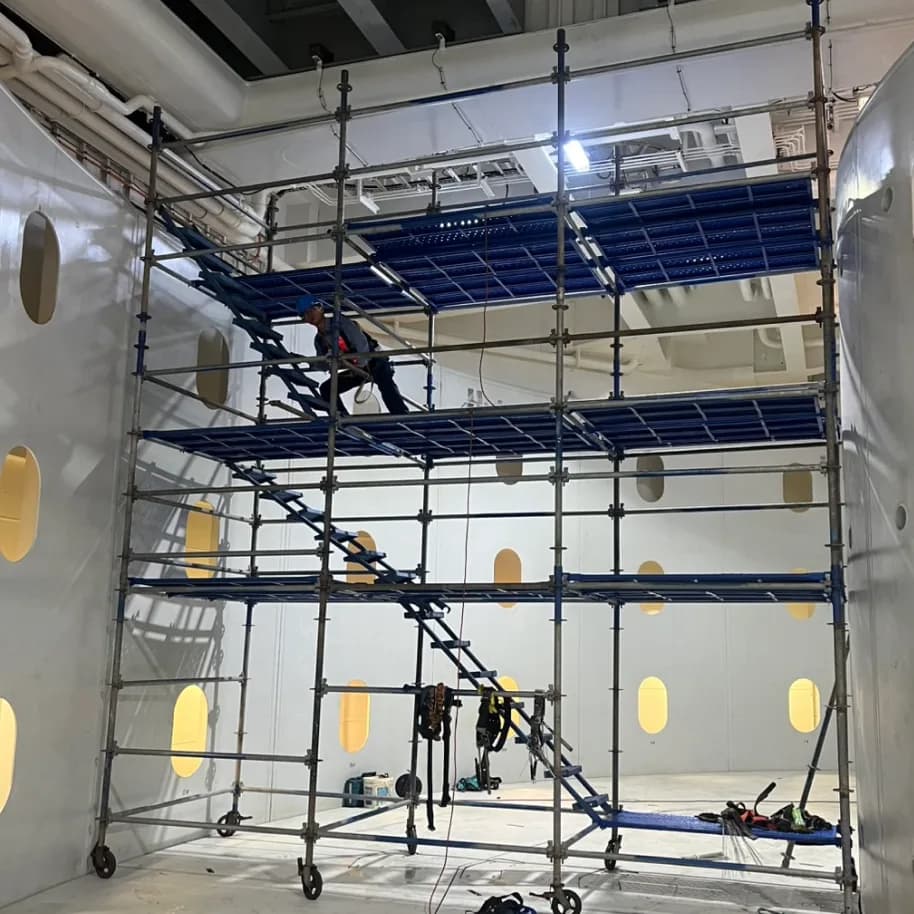
A three-tier mobile scaffold erected inside a compartment, on site the day after the order and finished the same day — because everything that follows is waiting on it
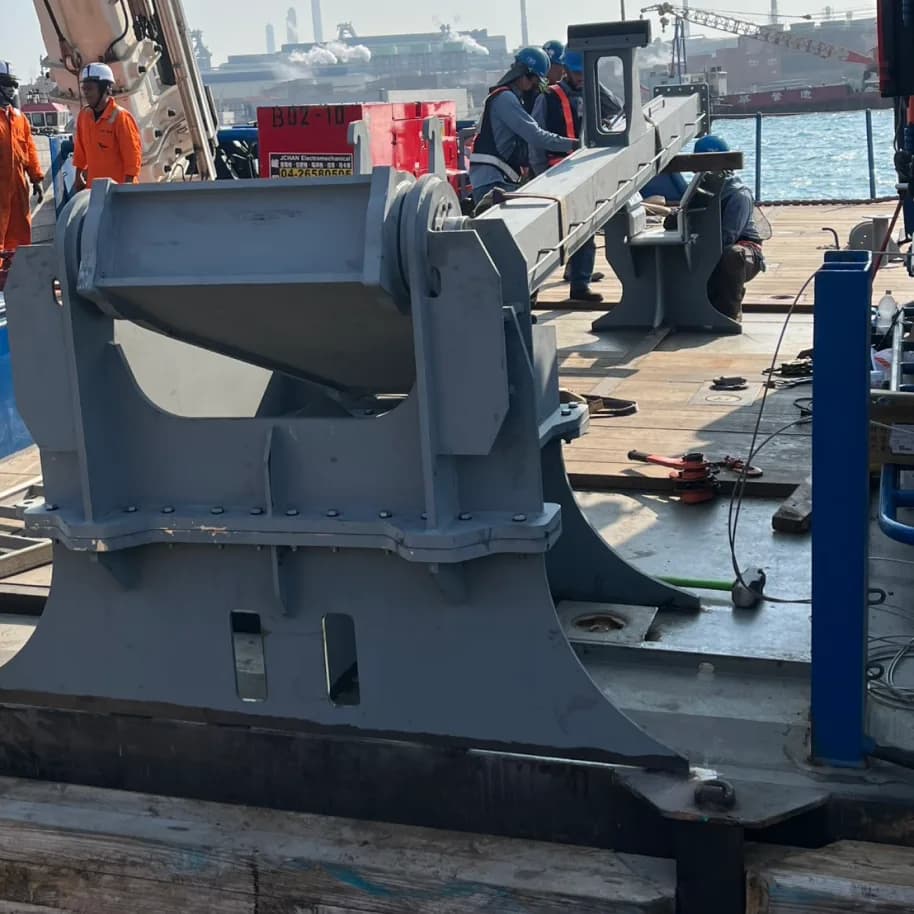
Thirteen days from order to acceptance, with a single day on board — because it had already been assembled and tested in the workshop

Partner With Us