
This is not a bracket. It is something that has to move.
A moving structure is harder to answer for than a fixed one. It does not fail all at once; it drifts out of true, and nobody can say precisely how far is too far. So before it left the workshop, TNO made it move.
A survey pole carries measuring equipment out clear of the hull. What sets it apart from an ordinary fixed bracket is that it has to stow: out when it is working, back in when it is not, rather than permanently occupying the ship's side.
That makes the pivot the heart of the base. It has to carry the bending moment of the pole when deployed, and still hold its clearances after being swung in and out hundreds of times — once those clearances open up, the pole no longer points where it should, and that is precisely what the equipment on the end of it cannot tolerate.
The real structural problem is not the pole but this one turning point — and the forces behind it all run into the welds and bolts between the base and the deck.
Material arrived the day after the order. Cutting and machining followed, then assembly in the workshop, and finally a test — the completed mechanism put through its movement for real.
Those three things are what let the site work be scheduled as a single day. Without any one of them, that day would have been a gamble.
The crew and their gear went aboard that morning. The base was lifted onto the deck, positioned and secured to the hull, the pole fitted — finished and accepted the same day.
Something that has to move should not be moving for the first time once it is bolted to a ship. TNO had already worked it in the shop, so the day on board was spent fitting a mechanism that was known to be sound — thirteen days for the job, and one of them asked of the vessel.
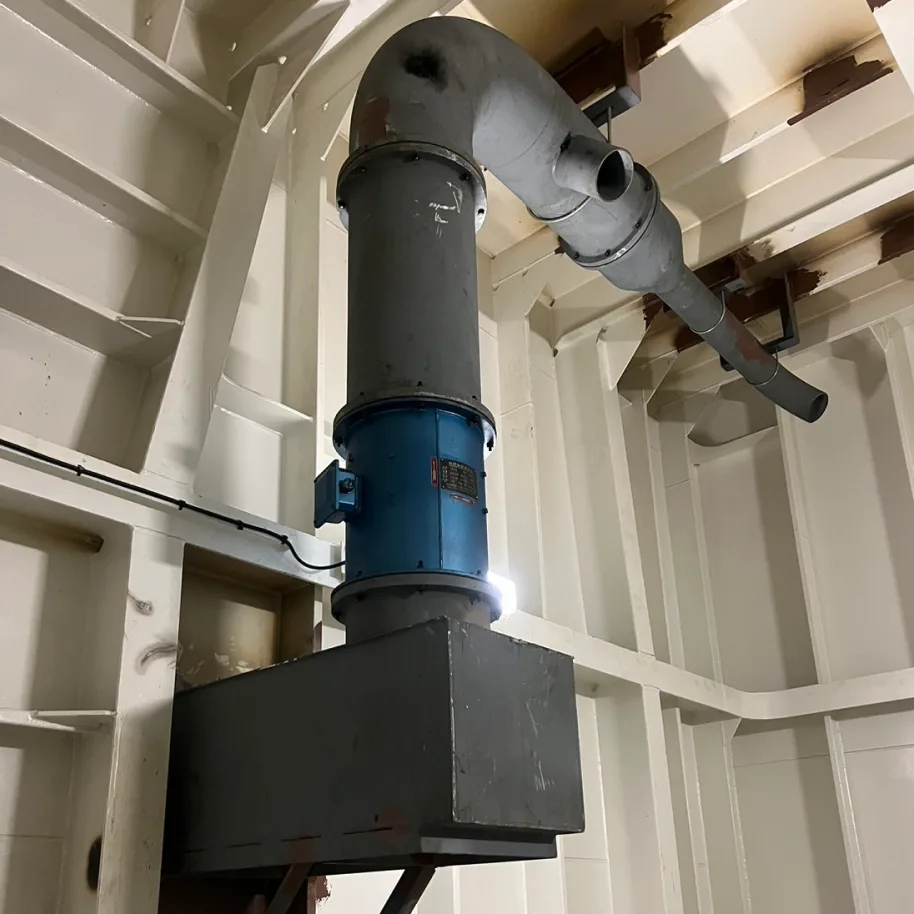
Ventilation components fabricated, assembled and finished in the workshop, then held ready — so that only positioning and welding remained to be done on board
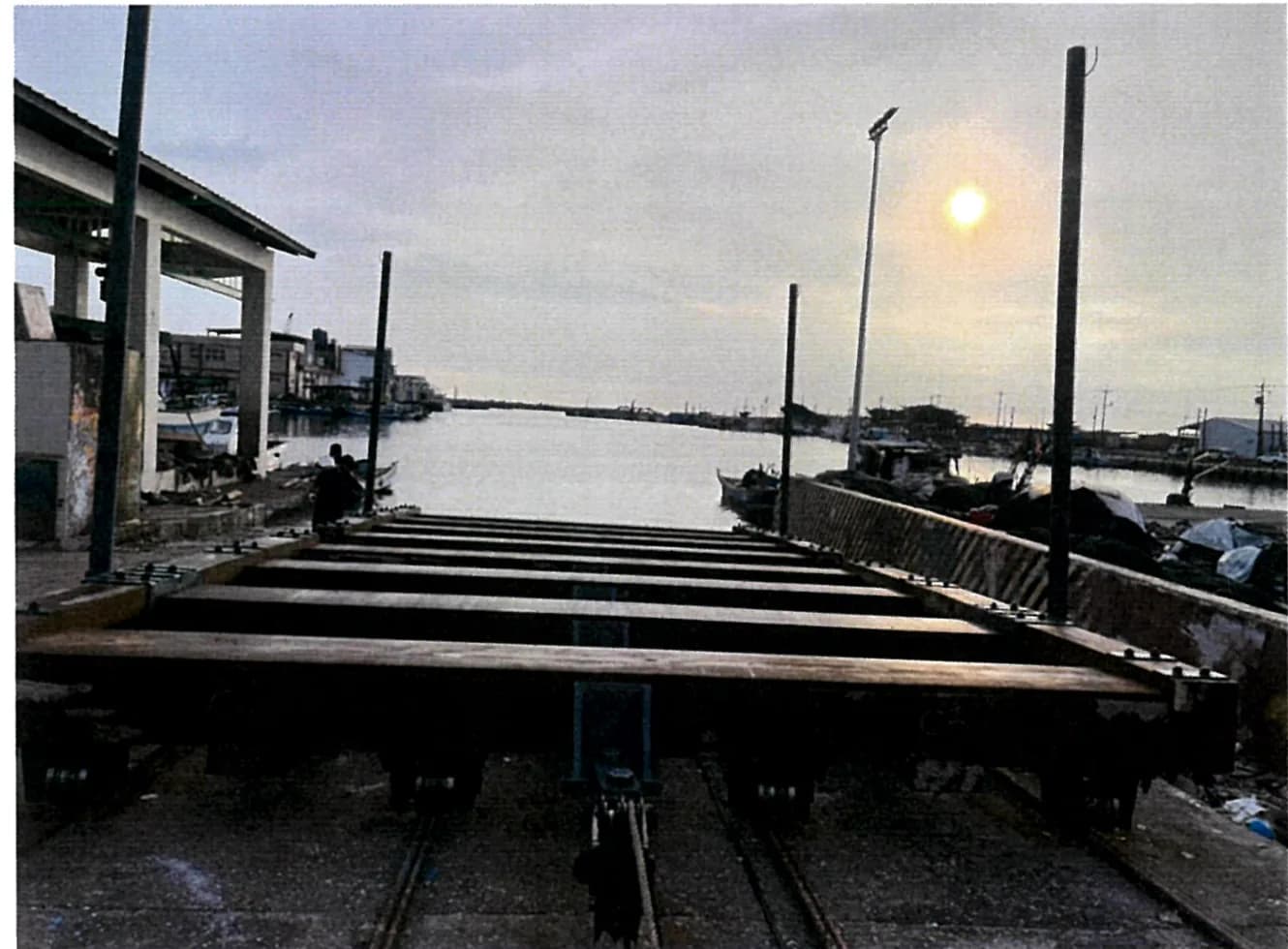
Replacing a fishing harbour's slipway cradle — built and assembled complete in the workshop, then demolished, installed and load-tested on site in seven days
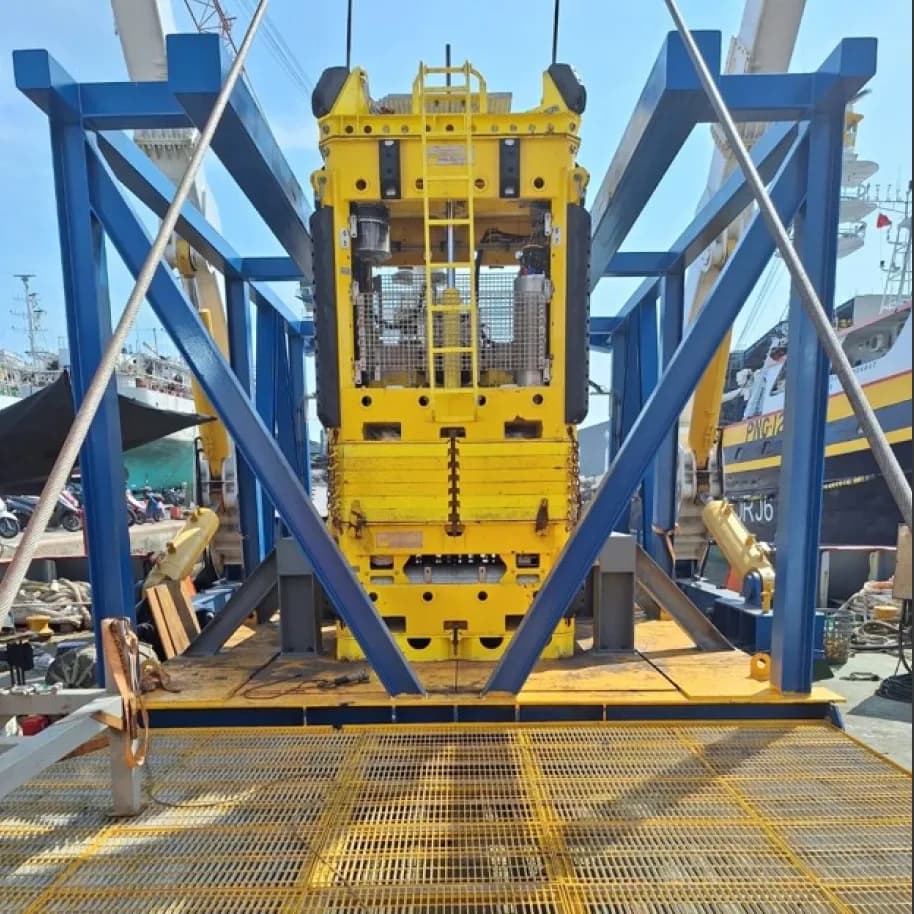
A portal-frame steel platform for equipment that is lifted and lowered in use — fabricated ashore, assembled on board in two separate visits, and accepted by the owner's representative

Partner With Us