Custom Engineering
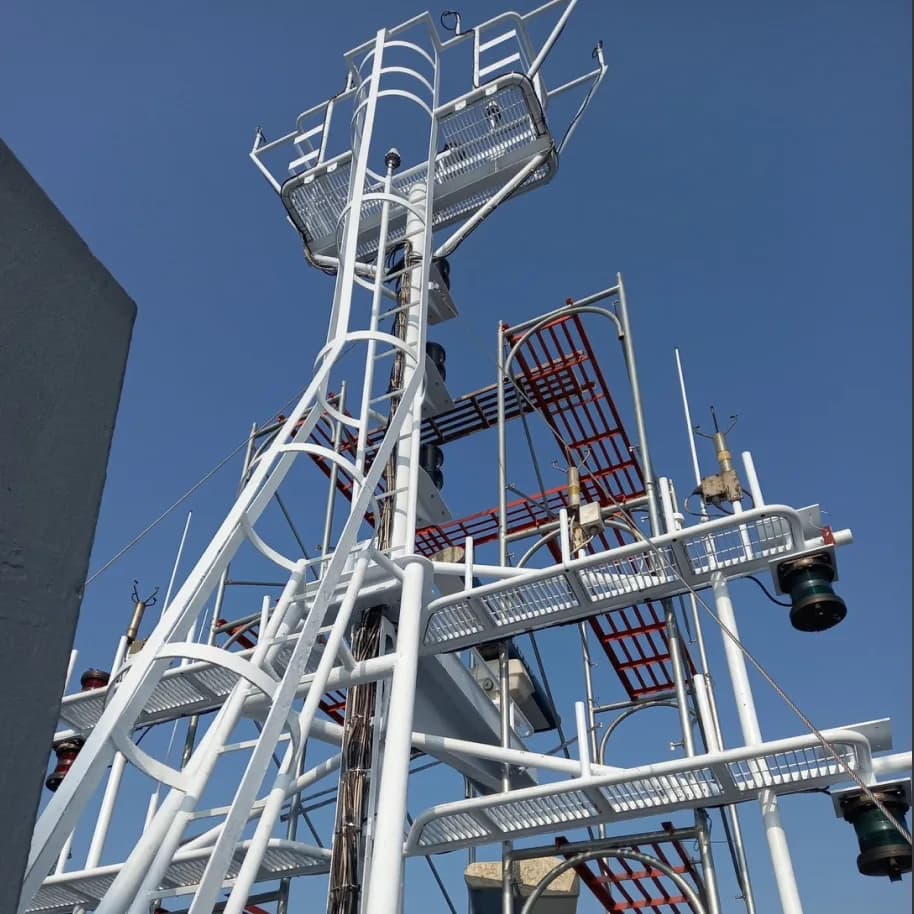
Radar, communications antennas and navigation lights have to stand clear of the superstructure, which makes a mast both a structural member and a mounting platform. It takes wind load at height and vibration underway, and any deflection or sway in the mast itself shows up directly in where the radar and antennas are pointing — so a mast is held to a higher standard of stiffness than a tower that merely carries weight.
The mast is built up as a braced tubular truss, stiff enough while keeping the area presented to the wind in check. Working platforms and guardrails at each level put the equipment within reach for maintenance, and the access ladder is caged for its full height. Mounting positions are set with an eye to how the equipment items shadow and interfere with one another, and to leaving room to work during servicing. Mast dimensions, the number of platform levels and the arrangement of the mountings are designed around the equipment fit and the structure of the deckhouse below.