Ship Maintenance
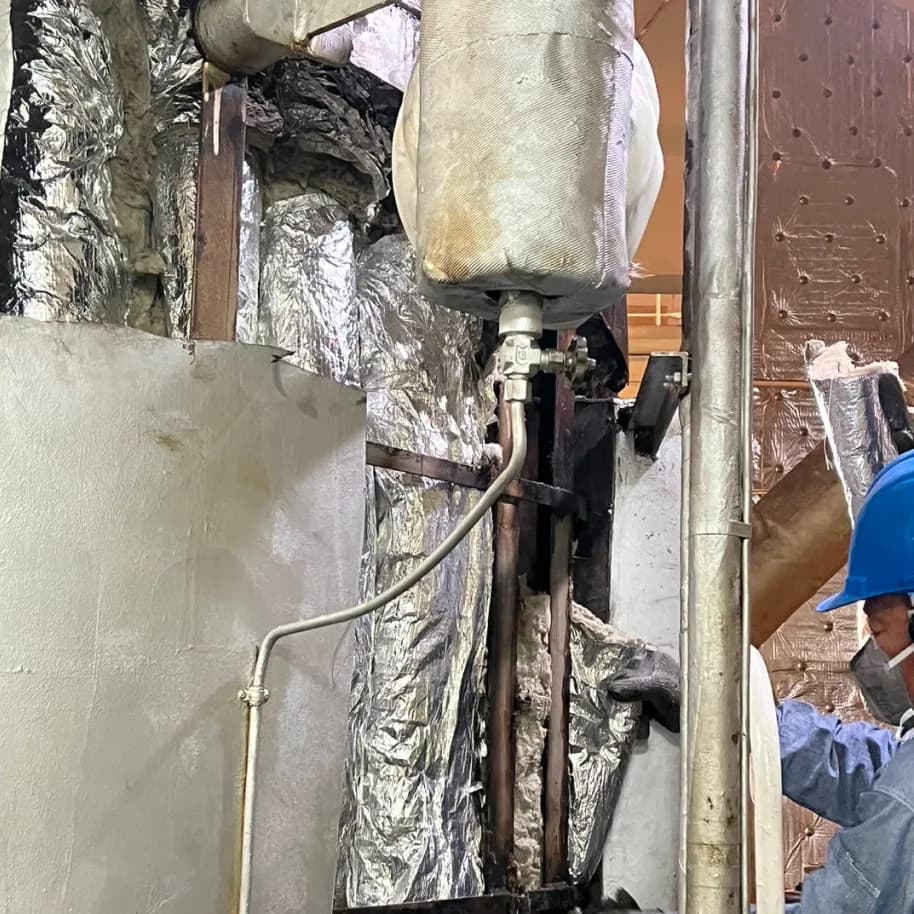
The insulation on a boiler's outer casing does three things at once: it brings the surface temperature down to where it will not burn anyone, it keeps heat from being lost into the compartment, and it shields the pipework and cabling around it. That material spends its life under thermal cycling and the vibration of the hull, and may take on moisture from a leak, so in time it slumps, breaks down, or works loose. Where it slumps, a thermal bridge forms and the surface temperature over that spot rises — yet from outside the cladding there may be nothing to see.
The work covers stripping out the existing insulation, inspecting the casing beneath, laying and securing the new material, and cutting, forming and finishing the metal cladding over it. Manholes, valves and measuring points — anything that has to come apart regularly — are given removable soft jackets instead, so the cladding need not be broken open at every service. Stripping old material releases a great deal of fibre dust, so protective hoods and masks are worn throughout and the surrounding equipment is covered beforehand. Insulation type and thickness are selected according to the surface temperature at each location and the applicable shipboard requirements.